A $95 annual fee, 14 transfer partners, and a 25% travel-portal boost. Why it is the cornerstone of almost every points strategy.

Gurnish Sahni
Jul 29, 2026

Chase Sapphire Preferred card used for an online purchase
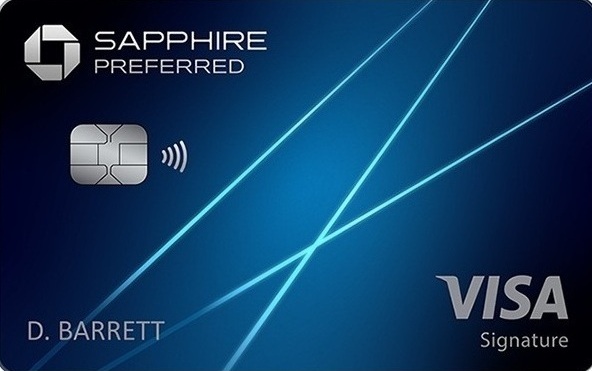
100,000 bonus points after spending $5,000 on purchases in the first 3 months (current limited-time offer)
Every "first travel card" conversation in this hobby eventually lands on the same answer: the Chase Sapphire Preferred. It has held that reputation for over a decade for a simple reason — nothing else combines a low $95 annual fee with a full seat at the table of transferable points.
That last part matters more than any single earning rate. Plenty of cards earn "points" or "miles." Far fewer let you actually move those points, penny for penny, into 14 different airline and hotel loyalty programs — which is what turns a pile of points into a business-class seat instead of a modest statement credit.
The card’s 2026 refresh added real, usable credits on top of the earning structure:
Between the hotel credit and the amortized Global Entry credit alone, most cardholders can recover the entire $95 fee without transferring a single point — everything earned on top of that is pure upside.
Chase Ultimate Rewards points transfer 1:1 to a roster of 14 airline and hotel programs, including United MileagePlus, Southwest Rapid Rewards, Air Canada Aeroplan, Virgin Atlantic Flying Club, Air France-KLM Flying Blue, Singapore Airlines KrisFlyer, and — on the hotel side — World of Hyatt, Marriott Bonvoy, IHG One Rewards, and Wyndham Rewards. (Note: as of mid-2026, transfers to World of Hyatt from Sapphire Preferred specifically moved to a 4:3 ratio rather than 1:1 — Sapphire Reserve cardholders keep the full 1:1 rate.)
Redeemed for a plain statement credit, 100,000 points are worth $1,000 flat. Redeemed through the Chase Travel portal, Sapphire Preferred cardholders get 25% more value — $1,250. Transferred to the right airline partner for a premium-cabin award seat, points-and-miles writers commonly value the same 100,000 points at $1,700 to $2,000+. That spread — between the floor and the ceiling — is the entire argument for holding a transferable-points card instead of a fixed-value cash-back card.
The Sapphire Preferred earns its keep for anyone who: eats out or orders in regularly (3x dining adds up fast), books at least one or two trips a year where a hotel or flight transfer is realistic, and wants a low-commitment entry point into transferable points before deciding whether a premium card like the Sapphire Reserve is worth the higher fee later.
It is a weaker fit for someone who mostly wants flat cash back with no interest in redemption strategy — a flat 1.5–2% cash-back card will out-earn the Preferred on category spend outside dining and travel, without any of the "which program do I transfer to" homework.
A decade after it first popularized the idea of a mass-market transferable-points card, the Sapphire Preferred still does the one thing that matters most: it makes 100,000+ points genuinely worth $1,700 or more to someone willing to spend twenty minutes learning how transfers work. For a $95 annual fee, that is still one of the best deals in the hobby.
Credit Miles Guru may earn a commission from card applications. This does not affect our editorial opinions or ratings.

Gurnish Sahni, founder of Credit Miles Guru, is a software engineer by profession and a passionate points strategist by heart. When he's not coding, he's crafting luxury travel itineraries using reward points to fly his family—especially his 5-year-old daughter—in business and first-class cabins around the globe. With a knack for smart spending and a love for unforgettable journeys, Gurnish shares tips on unlocking premium travel experiences without breaking the bank.