Living in the Midwest means no direct award flights to Europe. Here's the exact repositioning, transfer-bonus, and hotel-credit system I use to fly business class for pennies on the dollar.

Gurnish Sahni
Aug 9, 2026

A lie-flat business-class suite, the kind of seat a repositioning flight unlocks
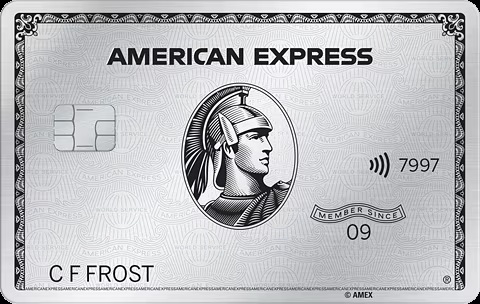
Up to 175,000 Membership Rewards points after spending $12,000 in the first 6 months
If you live in New York, Los Angeles, or Miami, award travel is basically handed to you on a silver platter. You open an airline app, search for a business-class flight to Paris, and boom — direct flights, wide open, for the taking.
I live in St. Louis. Smack in the middle of the Midwest, four hours from the nearest coast in any direction you point.
Don't get me wrong — I love the Gateway City. But flying internationally out of St. Louis Lambert International Airport (STL) on points is an exercise in madness. Finding a direct, high-value premium-cabin redemption out of STL to Europe or Asia is like trying to find a toasted ravioli in Tokyo: theoretically possible, but you're not going to stumble into it.
For years I stared at a growing stash of Amex and Chase points, refreshing search after search, collecting nothing but "no availability." Eventually it clicked: if I wanted to fly in luxury without paying cash, I couldn't rely on a single search box. I had to stop thinking like a tourist checking one route and start thinking like an algorithm — origin, routing, currency, and hotel all treated as separate variables to optimize, not one linear trip to book.
That became a repeatable, almost mechanical system. I use some version of it for nearly every trip now. Three moves: Repositioning, Point Arbitrage, and Statement Credit Tetris. Here's exactly how it played out on a real trip to Italy — real routes, a real transfer bonus, real math.
A few years ago, my wife and I wanted to go to Italy. Searching STL → Rome (FCO) directly returned exactly what I expected: three-layover economy itineraries running 150,000+ miles a person. A joke, and not a funny one.
This is where repositioning earns its keep. If the front door out of St. Louis is locked, you drive to a door that isn't.
Instead of searching for the destination, I decoupled the trip into two pieces. First, I stopped looking at STL entirely and went hunting for the best transatlantic sweet spot out of any major East Coast hub — JFK, Boston, Newark. The one that kept surfacing: Delta One to Europe, booked through Virgin Atlantic Flying Club, for 50,000 Virgin points plus roughly $60 in taxes — per person. Virgin doesn't fly the route itself; you're redeeming Virgin miles onto Delta's own lie-flat cabin, which is exactly the kind of partner-program arbitrage that makes flexible points worth hoarding in the first place.

The move was simple. Book a cheap ~$130 Southwest hop from STL to JFK. Grab a sandwich in the terminal. Board Delta One direct to Rome.
One repositioning leg, one long-haul award, zero connections once we hit JFK. For two of us, that's 100,000 Virgin Atlantic points and about $120 out the door for two lie-flat seats across the Atlantic — a redemption that would run close to $4,000–$5,000 in cash for the pair. That's the entire value of the strategy in one line: turn a 90-minute domestic hop most people wouldn't think twice about into the key that unlocks a coastal-hub sweet spot St. Louis will never have on its own.
Finding the flight is half the battle. Funding it — without draining the one currency you actually want to keep — is the other half.
We needed 100,000 Virgin Atlantic points for two Delta One seats. I had about 15,000 sitting in the account from a previous trip, leftover and otherwise useless — Virgin doesn't have a ton of everyday earning potential if you're not flying their metal. That left an 85,000-point gap.
Here's where I could've made the rookie mistake: buy the rest with cash, or drain my Chase Ultimate Rewards balance at a flat 1:1 transfer. Instead I checked the transfer partner matrix — and Amex happened to be running a 30% transfer bonus to Virgin Atlantic Flying Club, live for the whole month.
That bonus is the whole trick. Instead of transferring the full 85,000 points I needed, I only had to move enough Amex Membership Rewards points to hit that number after the bonus:
The math isn't a party trick — it's the entire reason Amex and Chase points are worth hoarding over airline-specific miles in the first place. I kept my Chase Ultimate Rewards balance completely untouched for the next opportunity, burned off a stash of orphaned Virgin miles that were otherwise dead weight, and turned a transfer bonus most people scroll past into two business-class seats to Rome.
Here's the most counterintuitive part of the whole system: I almost never redeem points for luxury hotels in Europe. Cash rates on incredible boutique properties are often shockingly reasonable, while the points price on major chains (Marriott, Hilton) gets inflated well past what the cash rate would actually cost you.
Instead, I run the annual hotel statement credits buried in my premium cards — because those aren't just a discount, they're a discount plus a second, separate credit plus perks most people never actually claim.
My wallet carries an Amex Platinum and a Chase Sapphire Reserve, and each one has a hotel credit that behaves completely differently:
We split four nights in Florence to run both credits back-to-back instead of picking one hotel and eating the full rate.

Nights 1–2, an Edit-collection property, $300/night ($600 total): applied one of the two $250 Edit credits → $350 out of pocket. Because that credit isn't tied to a calendar half, I've still got the second $250 sitting untouched for our next trip — whenever that turns out to be.
Nights 3–4, a Fine Hotels + Resorts property, $300/night ($600 total): applied the July–December $300 Amex credit → $300 out of pocket, plus the $100 property credit (we put it toward a couples massage), daily breakfast for two both mornings, and a room upgrade the front desk threw in at check-in.
Add it up: $1,200 in real hotel rates for four nights, $650 actually charged to a card, and roughly $100 of that clawed straight back as a spa credit — before you even count two mornings of free breakfast for two. That's not a rough estimate; that's what the receipts say.
Living in the Midwest forced me to get creative about all of this. It forced me to stop asking "how do I get from A to B" and start asking "what's the most efficient way to extract value from the points I already have."
It takes a little spreadsheet time, a willingness to book a throwaway positioning flight, and the patience to split a stay across two hotels instead of one. But when you're on a Roman balcony with a complimentary espresso, having crossed the Atlantic lie-flat for about $120 combined and slept four nights in boutique luxury for $650 combined — you stop minding that STL doesn't have a single nonstop to Europe. You just route around it.
American Express Platinum
Up to 175,000 Membership Rewards points after spending $12,000 in the first 6 months
$895 annual fee
Credit Miles Guru may earn a commission from card applications. This does not affect our editorial opinions or ratings.

Gurnish Sahni, founder of Credit Miles Guru, is a software engineer by profession and a passionate points strategist by heart. When he's not coding, he's crafting luxury travel itineraries using reward points to fly his family—especially his 5-year-old daughter—in business and first-class cabins around the globe. With a knack for smart spending and a love for unforgettable journeys, Gurnish shares tips on unlocking premium travel experiences without breaking the bank.